Guilford Park High School
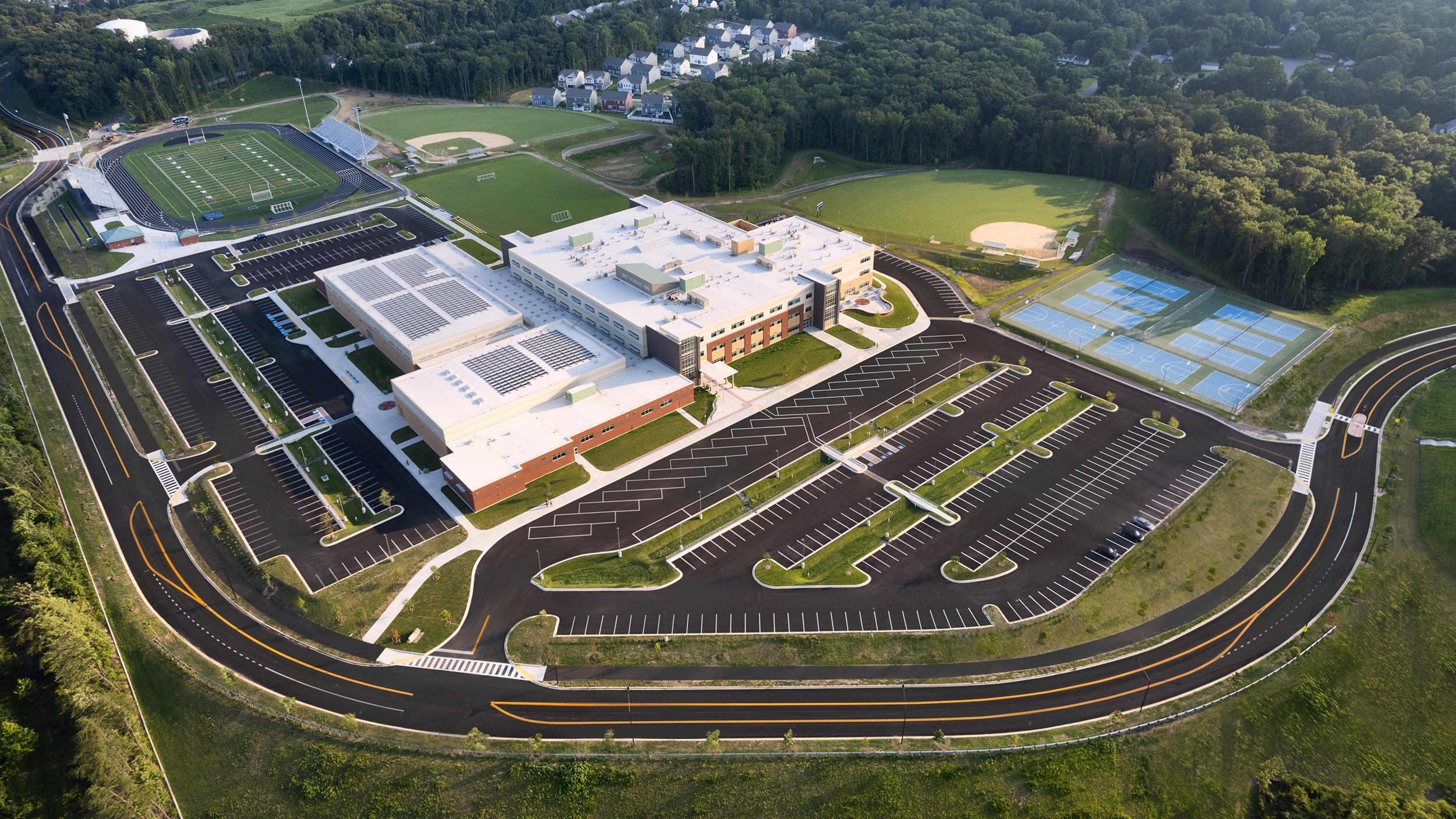
Guilford Park High School in Jessup, Howard County, Maryland, is a newly constructed, state‑of‑the‑art public high school built by the Howard County Public School System and completed for opening in August 2023. The campus spans approximately 42 acres and features a 289,000 SF educational facility designed on a modern prototype used by HCPSS, but expanded as the largest high school ever constructed in the district. The project included extensive site work, infrastructure, and sustainable building systems, such as stormwater management ponds, solar photovoltaic panels, and energy‑efficient design targeting a LEED Silver designation. The facility houses 40 classrooms, specialized STEM and technology education spaces, comprehensive athletic and performing arts facilities, and support spaces for up to 1,650 students, with parking and bus access integrated into the campus. Construction also involved significant ancillary work, including new roadway access, extensive utility installation, and athletic fields, culminating in a modern learning environment tailored for a growing student population in southeastern Howard County.
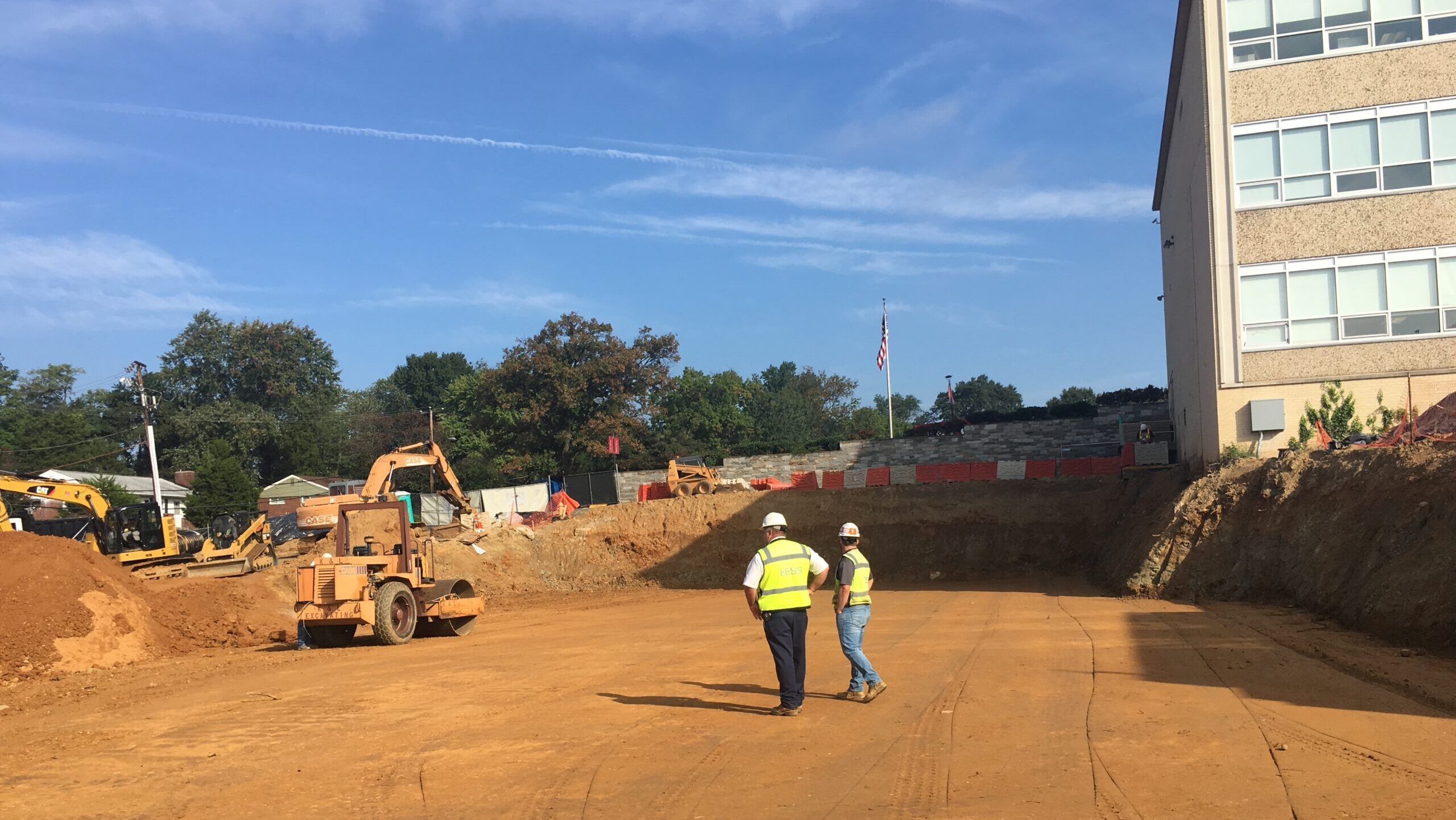
Hillis-Carnes provided comprehensive construction materials testing and inspection services for the Guilford Park High School project, covering soils, earthwork, concrete, masonry, structural steel, fireproofing, and pavements. Services included monitoring mass grading, fill placement, utility trench backfill, stormwater management ponds, bioretention facilities, and foundation construction, including soil evaluation, compaction testing, and dimensional verification. Concrete work encompassed sampling and testing for slump, air content, temperature, and compressive strength, as well as inspecting reinforcing steel and floor flatness/levelness. Masonry inspections involved field sampling and testing of mortar, grout, and masonry prisms, while structural steel inspections verified proper storage, installation, welding, and non-destructive testing of connections. Sprayed fireproofing was measured for thickness, density, bond, and compliance with UL standards. Pavement work included proofrolling, subgrade stabilization, stone base compaction testing, and monitoring asphalt placement and density. All testing and inspection activities were conducted under the direction of qualified engineers to ensure compliance with project specifications, drawings, and applicable standards.