DC General Campus Improvements
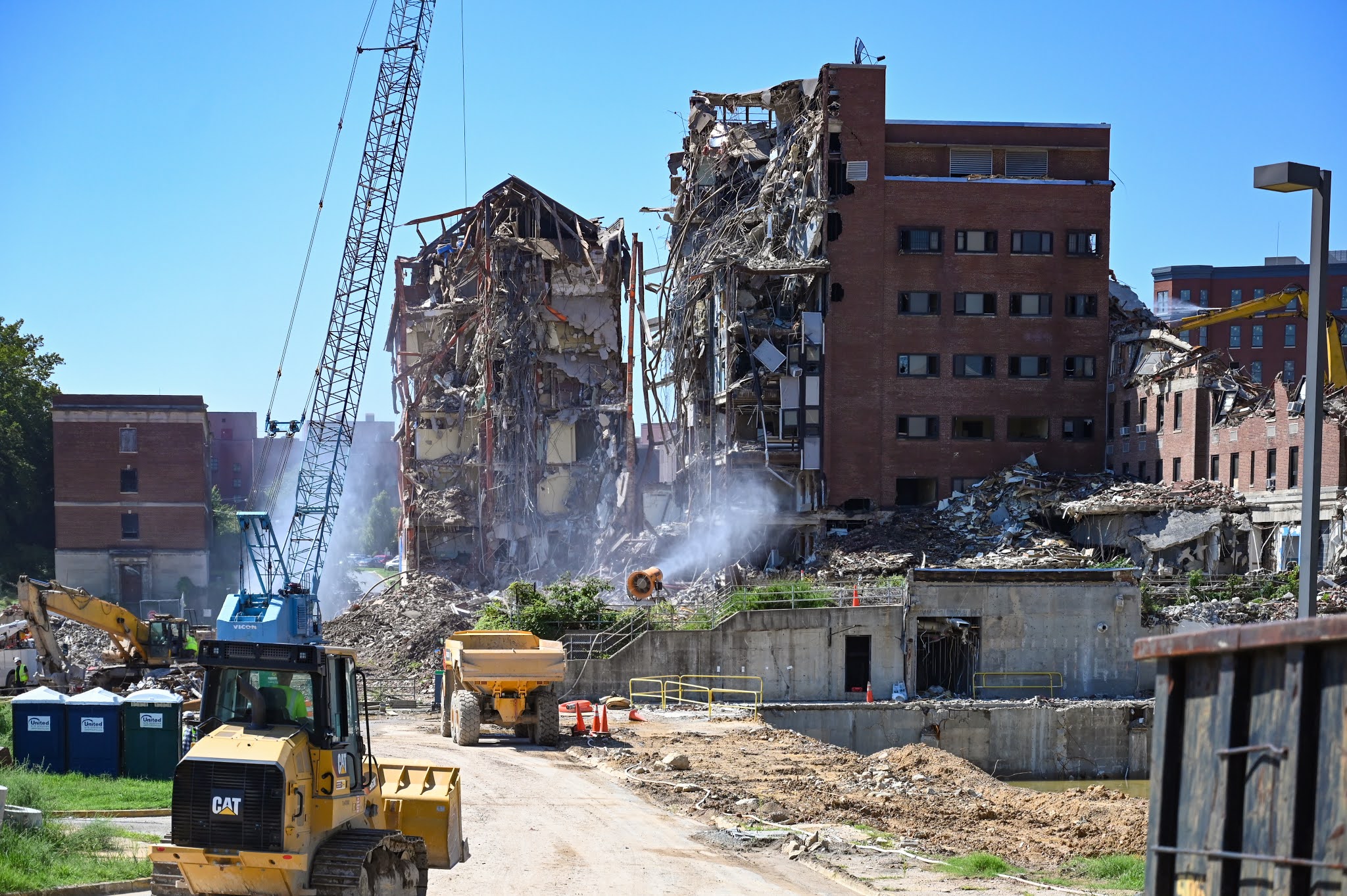
The DC General Campus Improvements project involved the deconstruction and demolition of six major buildings and associated site infrastructure at the former DC General Hospital campus. The project included approximately 704,000 SF of building demolition across multiple structures, including Buildings 9, 29, 4B, and Core Buildings 1 through 4. Work included hazardous materials abatement, structural demolition, removal of foundations and utilities, and demolition of site hardscaping such as pavements, curbs, sidewalks, and miscellaneous site structures. Following demolition activities, the site was graded and stabilized in preparation for future redevelopment.
Hillis-Carnes was retained by the District of Columbia Department of General Services (DGS) to provide hazardous materials abatement monitoring and environmental consulting services for the project. Hillis-Carnes developed and implemented an Abatement Monitoring Plan to perform third-party monitoring and oversight of hazardous building material abatement activities. The monitoring plan provided a comprehensive, step-by-step framework for oversight before, during, and after remediation activities. Services included project coordination, background air monitoring, containment inspections, daily inspection and monitoring during abatement operations, and final clearance inspections. Final inspections included visual evaluation of all work area surfaces to verify that asbestos dust and debris had been properly removed following abatement activities. Hillis-Carnes provided Certified Industrial Hygienists (CIHs), Industrial Hygiene Technicians, and other qualified field and management staff with the appropriate certifications and licenses to perform the required services.
In addition, Hillis-Carnes conducted a Phase I Environmental Site Assessment (ESA) of the approximately 16.13-acre property in general conformance with ASTM E1527-13, Standard Practice for Environmental Site Assessments. The assessment included site reconnaissance, area reconnaissance, a regulatory database review, a historical records review, and interviews with knowledgeable sources. The purpose of the ESA was to identify Recognized Environmental Conditions (RECs), Controlled Recognized Environmental Conditions (CRECs), and Historical Recognized Environmental Conditions (HRECs) associated with the property.